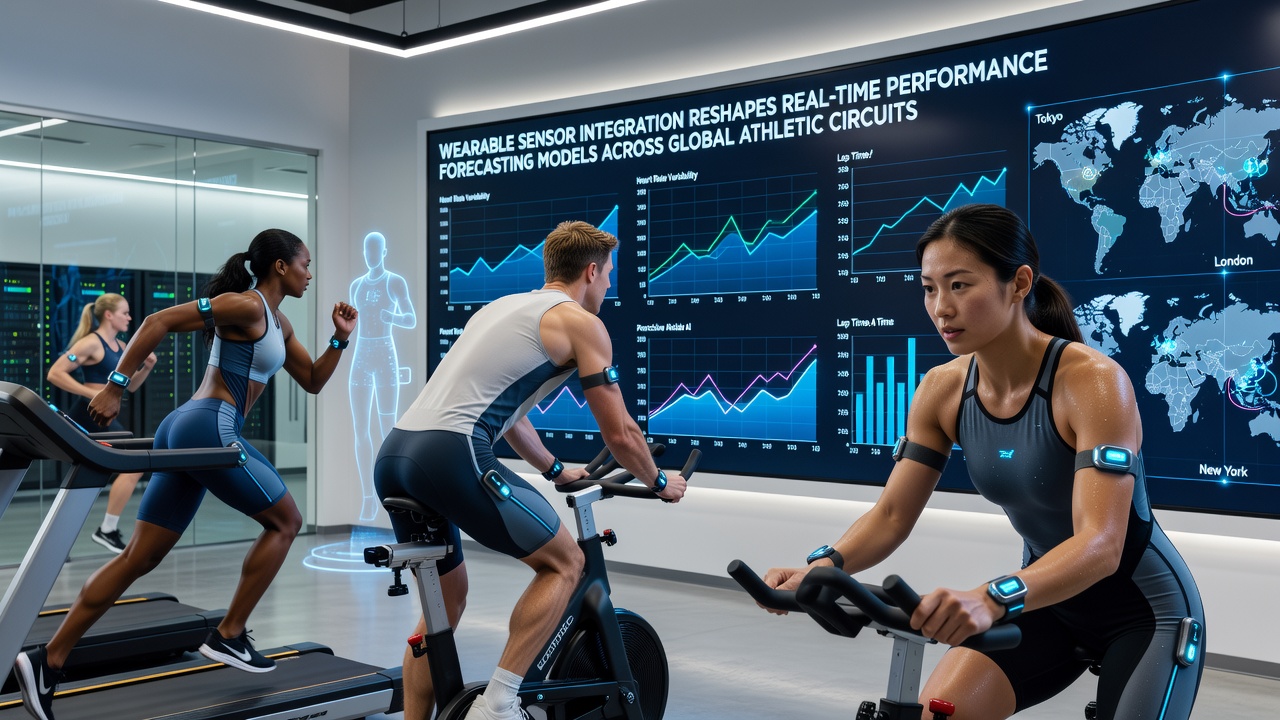
Wearable Sensor Integration Reshapes Real-Time Performance Forecasting Models Across Global Athletic Circuits
Global athletic circuits have integrated wearable sensors into training and competition routines since the early 2020s, and these devices now feed continuous streams of biometric and kinematic data into forecasting models that adjust predictions during events. Heart rate variability, acceleration patterns, GPS coordinates, and muscle oxygen levels combine through onboard processors before transmission to cloud-based analytics platforms, which update performance projections every few seconds.
Sensor Technologies Driving Data Collection
Devices strapped to wrists, chests, or embedded in footwear capture metrics at high frequency, while teams calibrate them against laboratory benchmarks to reduce measurement drift. Accelerometers track stride length and ground contact time, gyroscopes monitor rotational forces during jumps or turns, and optical sensors measure blood flow changes under the skin. These inputs merge with environmental variables such as temperature, humidity, and altitude that researchers record simultaneously at venues worldwide.
Forecasting algorithms process the incoming data through machine learning frameworks trained on historical competition sets from multiple continents. Models identify deviations from expected output curves, then recalculate probabilities for outcomes like sprint times, endurance thresholds, or recovery windows. In September 2026, several international federations reported expanded sensor deployment across track, cycling, and team sports, which allowed forecasters to incorporate live fatigue indicators that earlier static models had omitted.
Implementation Across Professional Leagues and Events
European football clubs transmit sensor readings from players during matches to sideline analysts who adjust substitution forecasts in real time, whereas North American basketball organizations apply similar streams to predict minutes before performance drops below set thresholds. Australian rules football teams combine GPS load data with heart rate recovery scores to forecast injury risk during extended campaigns, and Asian marathon circuits use chest-strap monitors to refine pacing strategies mid-race. Each circuit maintains its own data governance standards, yet cross-league collaborations have produced shared validation protocols that improve model accuracy across borders.
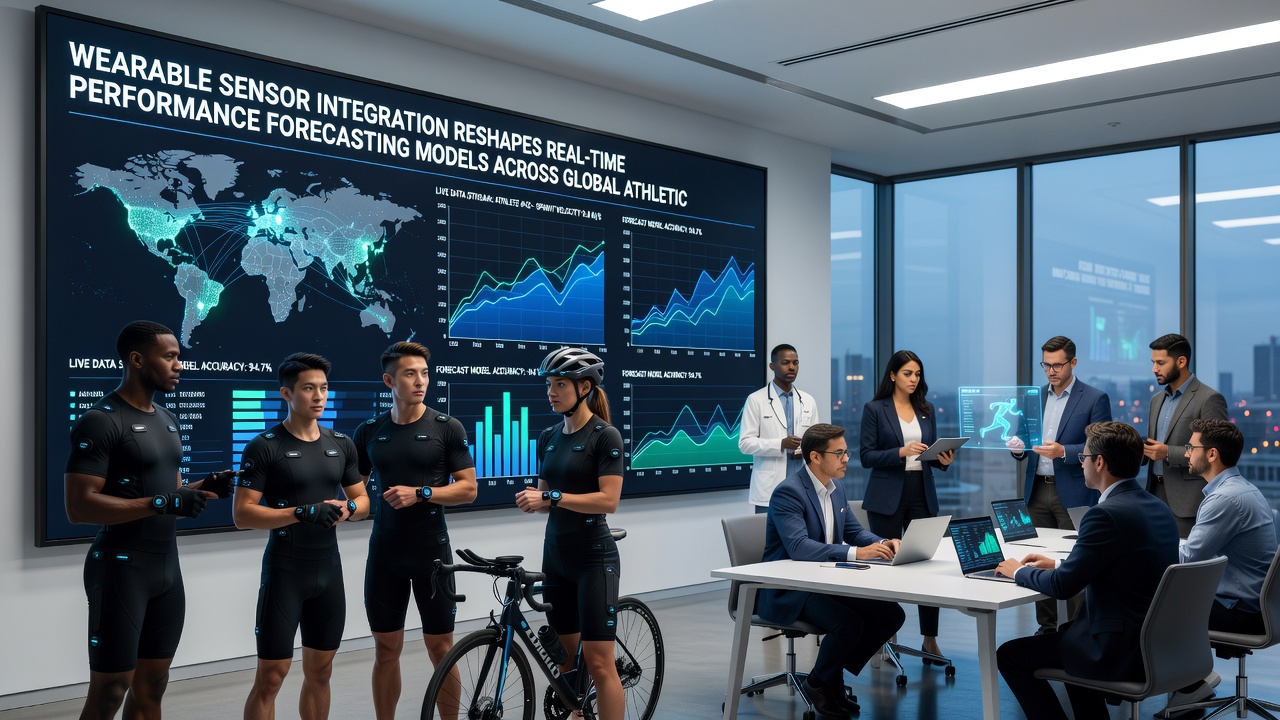
Coaches receive updated dashboards that display projected finish times or workload limits based on current physiological states, and these outputs integrate with video analysis to refine tactical decisions. Observers note that forecasting precision rises when models receive at least five distinct sensor streams rather than relying on single metrics such as heart rate alone. Data from the Australian Institute of Sport indicates that multi-sensor ensembles reduced prediction error margins by measurable percentages in endurance events during recent seasons.
Model Refinement and Machine Learning Integration
Engineers train recurrent neural networks and gradient-boosted trees on anonymized datasets drawn from thousands of athlete sessions, then fine-tune the networks with event-specific parameters. Real-time updates occur through edge computing nodes located near competition sites, which minimizes latency between sensor capture and model output. Researchers at institutions across North America and Europe have documented how these systems flag early signs of overexertion by comparing live readings against individualized baselines established during preparatory camps.
What's interesting is that altitude effects and travel fatigue appear as weighted variables in the latest iterations, allowing forecasters to adjust expectations for athletes crossing time zones or competing at elevation. The Sports Science Research Network published findings showing that inclusion of these contextual factors improved forecast reliability during multi-stage events held in varied geographic locations.
Data Privacy, Accuracy Standards, and Regulatory Oversight
Athletes and governing bodies establish consent frameworks that limit data access to designated performance staff, while independent auditors verify sensor calibration against international metrology standards. Accuracy challenges arise when electromagnetic interference or skin movement artifacts distort readings, prompting teams to deploy redundant sensor arrays and apply filtering algorithms. Regulatory agencies in multiple regions require disclosure of how forecasts influence training loads, although enforcement varies by sport and jurisdiction.
Future Trajectories Through 2026 and Beyond
Continued miniaturization of components and advances in battery efficiency support longer-duration monitoring without athlete discomfort, and emerging standards for data interoperability facilitate comparisons across different device manufacturers. As of September 2026, several circuits have begun pilot programs that merge sensor outputs with video-based pose estimation to create hybrid forecasting layers capable of anticipating tactical shifts during competition.
Conclusion
Wearable sensor integration continues to expand the granularity of real-time performance forecasting across global athletic circuits, supported by coordinated data pipelines, refined algorithms, and cross-regional validation efforts. The resulting models deliver updated projections that reflect physiological states as they evolve, which organizations apply to training adjustments and event strategy. Ongoing refinements in sensor reliability and model architecture sustain this evolution while maintaining focus on measurable performance indicators.